您现在的位置: 萬盛學電腦網 >> 程式設計 > >> 網路程式設計 >> PHP 程式設計
PHP 實現雙模式訪問陣列:同時支援 $arr['key'] 與 $obj->key 的三種方案
需求場景
希望同一個數據結構既能像陣列一樣 $data['x'] 訪問,又能像對象一樣 $data->x 訪問,且修改同步生效。這在配置對象、DTO、API 響應封裝中極其常見。
方案一:實現 ArrayAccess + 魔術方法 __get/__set(完全可控)
<?php
class ArrayObjectProxy implements ArrayAccess {
    private array $data = [];

    public function __construct(array $data = []) {
        $this->data = $data;
    }

    // ArrayAccess 接口四大方法
    public function offsetExists(mixed $offset): bool {
        return isset($this->data[$offset]);
    }

    public function offsetGet(mixed $offset): mixed {
        return $this->offsetExists($offset) ? $this->data[$offset] : null;
    }

    public function offsetSet(mixed $offset, mixed $value): void {
        if ($offset === null) {
            $this->data[] = $value;
        } else {
            $this->data[$offset] = $value;
        }
    }

    public function offsetUnset(mixed $offset): void {
        if ($this->offsetExists($offset)) {
            unset($this->data[$offset]);
        }
    }

    // 對象屬性訪問代理到陣列
    public function __get(string $name): mixed {
        return $this->offsetGet($name);
    }

    public function __set(string $name, mixed $value): void {
        $this->offsetSet($name, $value);
    }

    public function __isset(string $name): bool {
        return $this->offsetExists($name);
    }

    public function __unset(string $name): void {
        $this->offsetUnset($name);
    }

    // 可選:轉回原生陣列
    public function toArray(): array {
        return $this->data;
    }
}
測試驗證
$data = ['x' => 'x', 'y' => 'y'];
$obj = new ArrayObjectProxy($data);

// 陣列讀寫
echo $obj['x'];       // x
$obj['x1'] = 'x1';
echo $obj->x1;        // x1 (陣列寫入,對象讀取同步)

// 對象讀寫
$obj->y1 = 'y1';
echo $obj['y1'];      // y1 (對象寫入,陣列讀取同步)

// 輸出:
// 陣列方式訪問($obj['x'])輸出:x
// 對象方式訪問($obj->y)輸出:y
// 陣列方式賦值$obj['x1']='x1'
// 對象方式訪問($obj->x1)輸出:x1
// 對象方式賦值$obj->y1='y1'
// 陣列方式訪問($obj['y1'])輸出:y1
方案二:原生 ArrayObject + ARRAY_AS_PROPS 標誌(一行代碼)
PHP 內建 ArrayObject 類配合旗標即可實現同樣效果:
$data = ['x' => 'x', 'y' => 'y'];
$obj = new ArrayObject($data, ArrayObject::ARRAY_AS_PROPS);

echo $obj['x'];   // x
echo $obj->y;     // y

$obj['x1'] = 'x1';
echo $obj->x1;    // x1

$obj->y1 = 'y1';
echo $obj['y1'];  // y1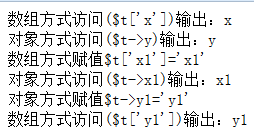
方案三:匿名類快速構建(PHP 7.0+,適合臨時用)
$data = ['x' => 'x', 'y' => 'y'];
$obj = new class($data) extends ArrayObject {
    public function __construct(array $data) {
        parent::__construct($data, ArrayObject::ARRAY_AS_PROPS);
    }
    // 可在此擴展自定義方法
    public function toJson(): string {
        return json_encode($this->getArrayCopy());
    }
};

echo $obj->toJson(); // {"x":"x","y":"y"}
三方案對比與選型建議
| 維度 | 方案一:手寫 ArrayAccess | 方案二:ArrayObject | 方案三:匿名類 |
|---|---|---|---|
| 代碼量 | ~40 行 | 1 行 | ~10 行 |
| 可定制性 | 最高(可加驗證、事件、日誌) | 中(可繼承擴展) | 高(可內聯邏輯) |
| 性能 | 略低(用戶態方法調用) | 最高(C 級實現) | 同方案二 |
| 序列化 | 需實現 Serializable | 原生支援 | 原生支援 |
| JSON 編碼 | 需實現 JsonSerializable | json_encode 直接支援 | 直接支援 |
| 推薦場景 | 領域模型、表單對象、需業務邏輯 | 通用配置、快速原型、數據傳輸 | 一次性腳本、閉包內部、測試代碼 |
進階:結合只讀屬性
PHP 8.1+ 可用 readonly 修飾符構建不可變值對象:
readonly class Config {
    public function __construct(
        public string $appName,
        public int $maxConnections,
        public array $features = []
    ) {}
}

$cfg = new Config('MyApp', 100, ['cache' => true]);
// $cfg->appName = 'Other'; // Error: Cannot modify readonly property
// 但無法直接用 $cfg['appName'],需搭配 ArrayObject 或實現 ArrayAccess
總結
- 最快上手:
new ArrayObject($data, ArrayObject::ARRAY_AS_PROPS)。 - 需業務邏輯/驗證:手寫
ArrayAccess+__get/__set。 - 現代 PHP:優先考慮
readonly class+ 結構化數據,避免動態屬性帶來的維護陷阱。
推薦文章
- PHP 超全域變數完整指南:$_SERVER、$_GET、$_POST、$_SE…
- PHP empty()、is_null()、isset() 三大判空函數深度對比
- PHP PDO 完整使用指南:連接配置、CRUD 操作、事務、預處理、錯誤處理與…
- PHP 取得檔案時間完整指南:修改、建立、存取時間
- ThinkPHP 內容分頁實作:編輯器分頁符與前端顯示邏輯
- PHP 計算距離指定日期剩餘天數:支援跨年、生日倒計時、節日提醒場景
- PHP Cookie 與 Session 深度對比:存儲機制、安全性、性能與最佳…
- PHP 與 JavaScript 互動:打造頁面計數器實作教學
- PHP GD 圖片處理完整教學:建立、縮圖、繪文字、水印、格式轉換
- PHP 分頁函數完整實作:支援 URL 參數保留、下拉跳頁、自定義顯示筆數
copyright © 萬盛學電腦網 all rights reserved