您现在的位置: 萬盛學電腦網 >> 程式設計 > >> 網頁製作 >> 互動設計
jQuery 尺寸與位置 API 圖解速查:徹底搞懂 inner/outer/offset/position/scroll 差異
jQuery 尺寸位置 API 看似簡單,實戰中極易混淆:**`outerHeight(true)` vs `outerHeight()`**、**`position()` vs `offset()`**、**`scrollTop()` 到底量誰的高**。本文用**假想屏幕向上延伸模型**徹底釐清,附手繪圖解與代碼驗證邏輯。
一、尺寸 API 家族圖譜
以高度為例,寬度邏輯同理:
innerHeight() = padding-top + height + padding-bottom

outerHeight() = outerHeight(false)
            = border-top + padding-top + height + padding-bottom + border-bottom

outerHeight(true)
            = margin-top + border-top + padding-top + height + padding-bottom + border-bottom + margin-bottom
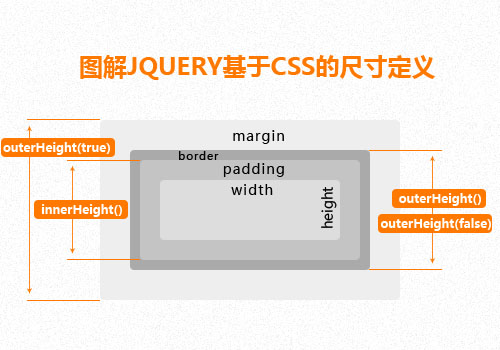
**易錯點**:`outerHeight()` 默認參數為 `false`(不含 margin),極易記反。
二、位置 API 雙雄:offset() vs position()
**核心區別只有一個:參考系不同**
| API | 參考系 | 適用場景 |
|---|---|---|
| `offset()` | **文檔** | 全局定位、彈窗居中、元素相對頁面座標 |
| `position()` | **最近的有定位父級** | 相對父容器定位、拖拽限制區域、局部佈局計算 |
無定位父級時,`position()` 退化為相對文檔,與 `offset()` 相同——**但代碼中必須明確語義,避免維護陷阱**。
三、scrollTop()/scrollLeft():假想屏幕向上延伸模型
很多初學者不理解 `$(document).scrollTop()`。引入**假想屏幕向上延伸**概念:
- 文檔高度 > 視口高度時,文檔向上滾動進入視口
- `scrollTop()` = **已滾動進視口上方的文檔高度**
- 不限於 `window`:任何 `overflow: auto/scroll` + 固定高度的容器皆可用

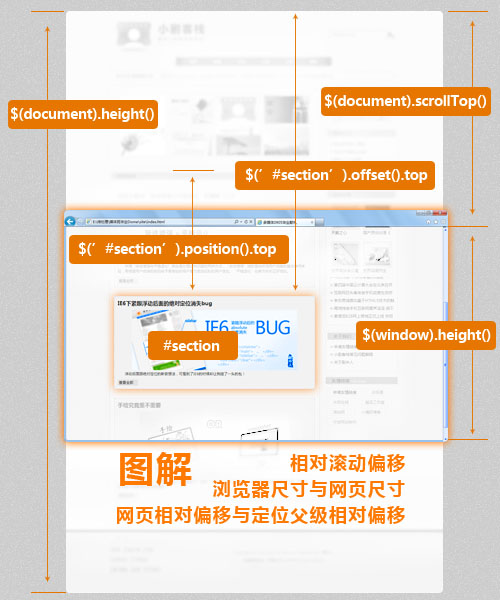
圖中綠色區域即 `scrollTop()` 代表的長度——一眼看懂,永不忘記。
四、實戰驗證代碼片段
<div id="outer" style="margin:20px; border:5px solid red; padding:10px; width:300px; height:200px; overflow:auto;">
  <div id="inner" style="height:500px; background:linear-gradient(blue, green);"></div>
</div>

<script>
const $outer = $('#outer');
const $inner = $('#inner');

console.log('=== 尺寸 ===');
console.log('inner height:', $inner.innerHeight());      // 500
console.log('outer height:', $outer.innerHeight());      // 200 (可視區高度)
console.log('outer height(true):', $outer.outerHeight(true)); // 200+20+20+5+5=250

console.log('=== 位置 ===');
console.log('inner offset:', $inner.offset());           // {top: 35, left: 35} 相對文檔
console.log('inner position:', $inner.position());       // {top: 15, left: 15} 相對 #outer (有 relative 定位)

console.log('=== 滾動 ===');
$outer.scrollTop(100);
console.log('outer scrollTop:', $outer.scrollTop());     // 100
console.log('inner position after scroll:', $inner.position()); // {top: -85, left: 15} 相對父級可視區
</script>
五、避坑清單
- 獲取隱藏元素尺寸 → 先 `css({display:'block', visibility:'hidden'})` 測量再還原
- Box-sizing: border-box 時,`width()`/`height()` 返回 content-box 尺寸,需用 `outerWidth(true)` 獲取佔用空間
- 動畫中讀取尺寸位置 → 用 `queue()` 回調或 `requestAnimationFrame` 確保佈局完成
- iframe 跨域頁面 → `offset()`/`position()` 失效,需 `postMessage` 協同
結語
尺寸與位置 API 是前端佈局、動畫、拖拽、虛擬列表的基石。**圖解建立心智模型,代碼驗證鞏固肌肉記憶**——收藏本文,下次遇到「為什麼位置對不上」時,30 秒定位根因。
- 上一篇程序編程: 手機搜索特性深度解析:從用戶畫像到 SOLOMO 生態的商業機會地圖
- 下一篇程序編程: 網頁設計基礎:主題篇——從概念提煉到視覺系統的完整構建指南
推薦文章
- 交互設計師入行避坑指南:前三年規劃與作品集核心邏輯
- 別說你懂 margin:從盒模型到 BFC 的深度實戰解析
- 專訪百度大UE設計經理李靜:簡單可依賴背後的設計哲學與職場智慧
- 網頁設計實戰:如何運用黃金比例打造視覺平衡與吸引力
- IE6 下 13px 字體失效自動顯示更大字體的解決方案
- 前端神器:jQuery 自動本地保存插件 Sisyphus.js —— 徹底告別…
- 移動應用界面設計模式:搜索、排序、篩選的 10 大核心模式詳解
- 漸變色設計圖鑑:18 個網頁實戰演繹色彩流動的視覺魔力
- 站內搜索體驗大升級:22 條優化策略全清單(從搜索框到結果頁)
- 打造優雅初始狀態頁:從「空白畫布」到「引導入門」的三大核心策略
copyright © 萬盛學電腦網 all rights reserved